My Approach:
A person centered approach is the foundation from which I start. From there I explore with the person; what they feel they need, what they want, and what has helped in the past. Accepting people as the experts on their own lives, I allow them to guide whether we take a skills-oriented approach, an unstructured but trauma informed path, or something else. I am trained in EMDR. I’ve done art with my clients. I’ve turned on music and danced with a client. I’ve crocheted with clients. I’ve leaned into works of literature as a tool. I’ve incorporated the timeless wisdom of children’s’ books and poetry. I try to be like a mirror reflecting back people’s strengths and value and worth. It’s a beautiful thing when people start believing in their own great worth.
My Experience :
At UnityPoint Health Meriter NewStart:
I learned to meet people where they are, whether they are striving for total sobriety or something else.
I learned how to help guide people in their process of creating their recovery path.
I learned to appreciate a harm reduction perspective.
My Experience Working with Individuals in Recovery from Eating Disorders:
At Inner Haven Wellness:
I learned to recognize the link between disordered eating behaviors and individuals’ struggle for control within a world filled with uncertainty.
I learned to challenge societal messaging about bodies and diet culture.
I learned the value of integrating elements Acceptance and Commitment therapy and Dialectical Behavior Therapy in order to help people navigate recovery.
The Start of my EMDR Journey and of Expanding my Knowledge of Dissociation:
At Sagent Behavioral Health:
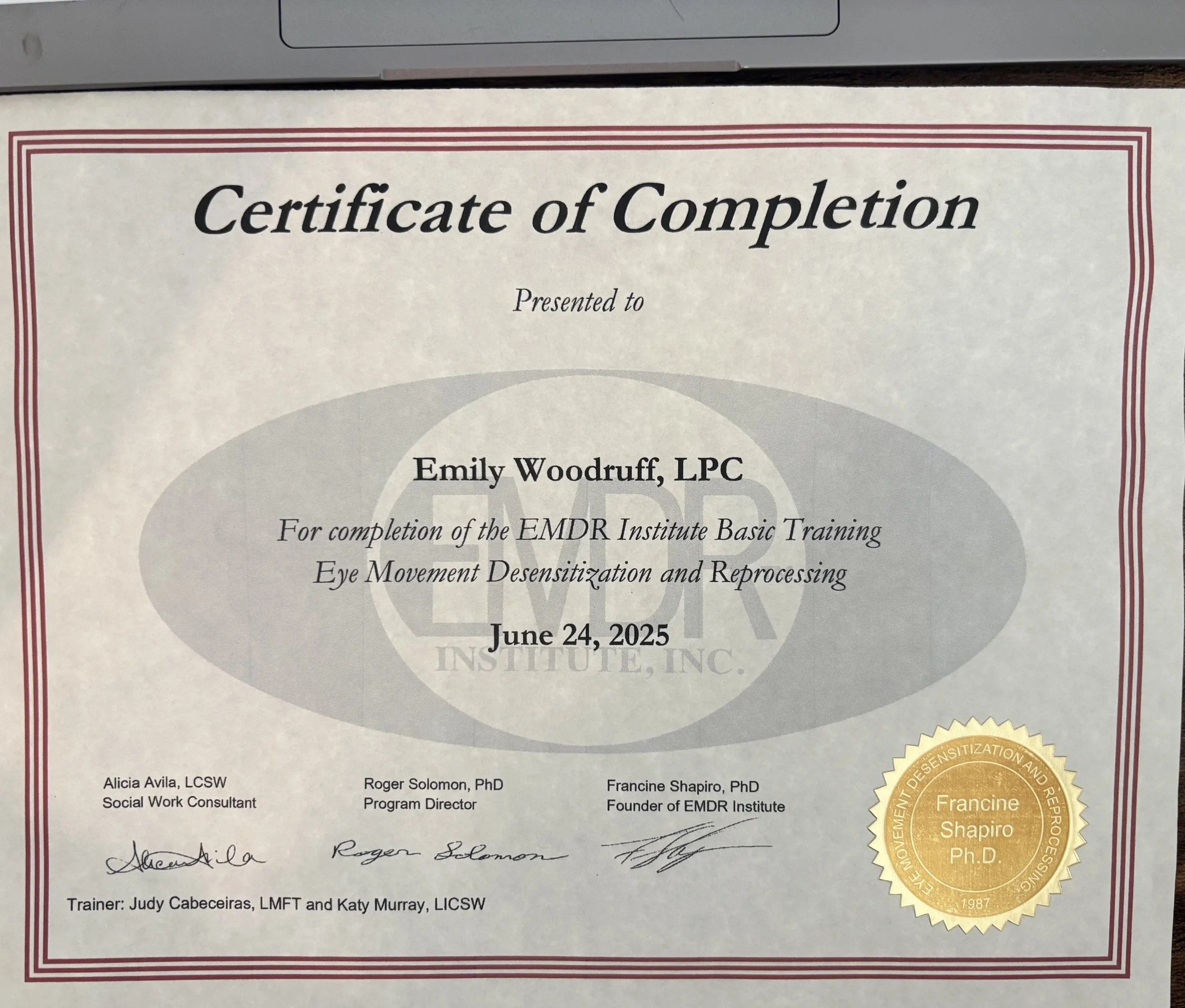
· I incorporated Eye Movement Desensitization and Reprocessing (EMDR) into my practice as a therapist.
· I had the privilege of holding space for people as they engaged in the deep work of healing from trauma.
· I learned to administer and interpret the Multidimensional Inventory of Dissociation (MID) Analysis. This a tool helpful to use in the assessment and diagnosis of dissociative disorders.
· I had the privilege of helping clients living with Dissociative Identity Disorder, and other dissociative disorders, increase their understanding and compassion for their inner system of parts.
At each of these places, I am so deeply honored and grateful to have been, even briefly, a part of my clients’ life stories. If any of you read this, please know that you touched my life and I am so glad to know that you are out there in the world being you. I will always be silently rooting for you.
To potential new clients, I would love the opportunity to get to know you and help your find your way towards healing and a values driven life.
In sessions I incorporate the following modalities:
-
EMDR is a therapeutic modality initially developed for the treatment trauma. EMDR incorporates bilateral stimulation in the form of eye movements or tapping. The bilateral stimulation is thought to activate the individual’s natural information processing abilities, similarly as they would be activated in REM sleep. This allows for the negatively stored information, the trauma, to be re-processed and stored adaptively within the individual’s past. The goal is for the trauma to no longer negatively impact day to day functioning in the present.
If you want to know more, you can check out this link:
What is EMDR Therapy? - https://youtu.be/wQAUzUN0UGY?si=PRoQupLJM-wsZuBT
-
Person Centered Therapy advocates for the belief that an individual is the expert on their own life. Healing may happen for an individual within a therapeutic relationship with a therapist presenting with unconditional positive regard.
If you want to know more, please follow this link:
-
MI is commonly used to help an individual clarify ambivalence, perhaps in regard to sobriety or a choice they need to make. The therapist will notice and explore the individual’s contemplation of potential change.
If you would like to know more, please follow this link:
www.psychologytoday.com/us/therapy-types/motivational-interviewing
-
Ego States work can be used on its own or incorporated as cognitive interweaves within the work of EMDR. Ego states are presentation of an individual’s parts. For example, A person may feel that a part of them does not want to go to a social event and another part of them does want to go. Ego States work can be helpful in the treatment of trauma and dissociation.
I have learned about Ego State therapy from Robin Shapiro. If you would like to learn more about it from here, here is a link to a video of her describing it:
-
Through Acceptance and Commitment Therapy, individuals can be guided towards identifying their core values and learning to live a values driven life.
If you would like to learn more, please follow this link:
www.psychologytoday.com/us/therapy-types/acceptance-and-commitment-therapy
-
DBT has a multitude of skills that can be helpful in varying aspects of life. The skill categories are Mindfulness, Interpersonal Effectiveness, Emotional Regulation, and Distress Tolerance.
If you would like to learn more, please follow this link:
www.psychologytoday.com/us/therapy-types/dialectical-behavior-therapy
-
CBT can be helpful for identifying unhelpful and helpful behavior patterns and thinking patterns.
If you would like to learn more, please follow this link:
www.psychologytoday.com/us/therapy-types/cognitive-behavioral-therapy
-
I strive to listen and understand the needs of each individual who comes to see me. The above therapeutic modalities are like my toolbox from which I draw as needed for each individual.
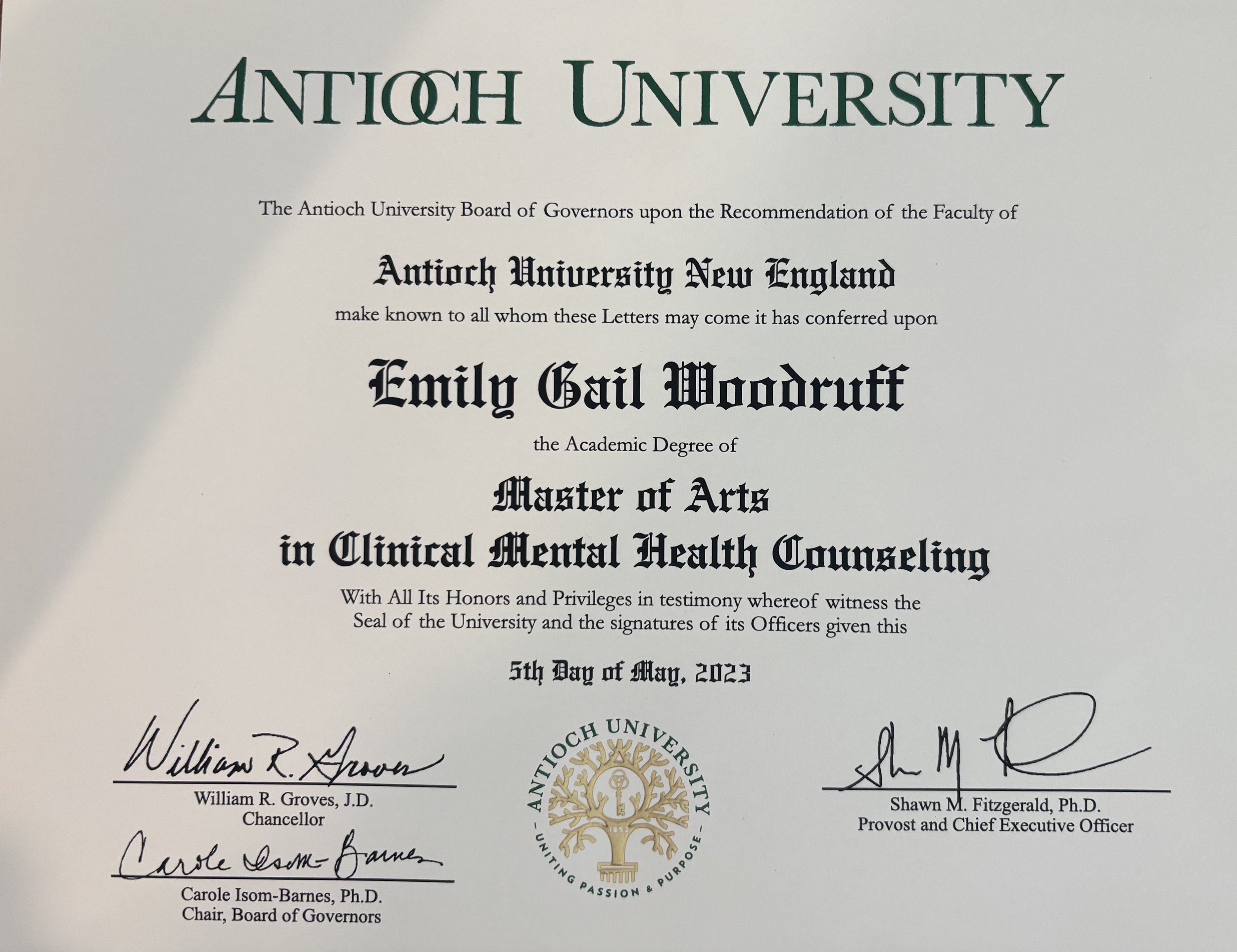
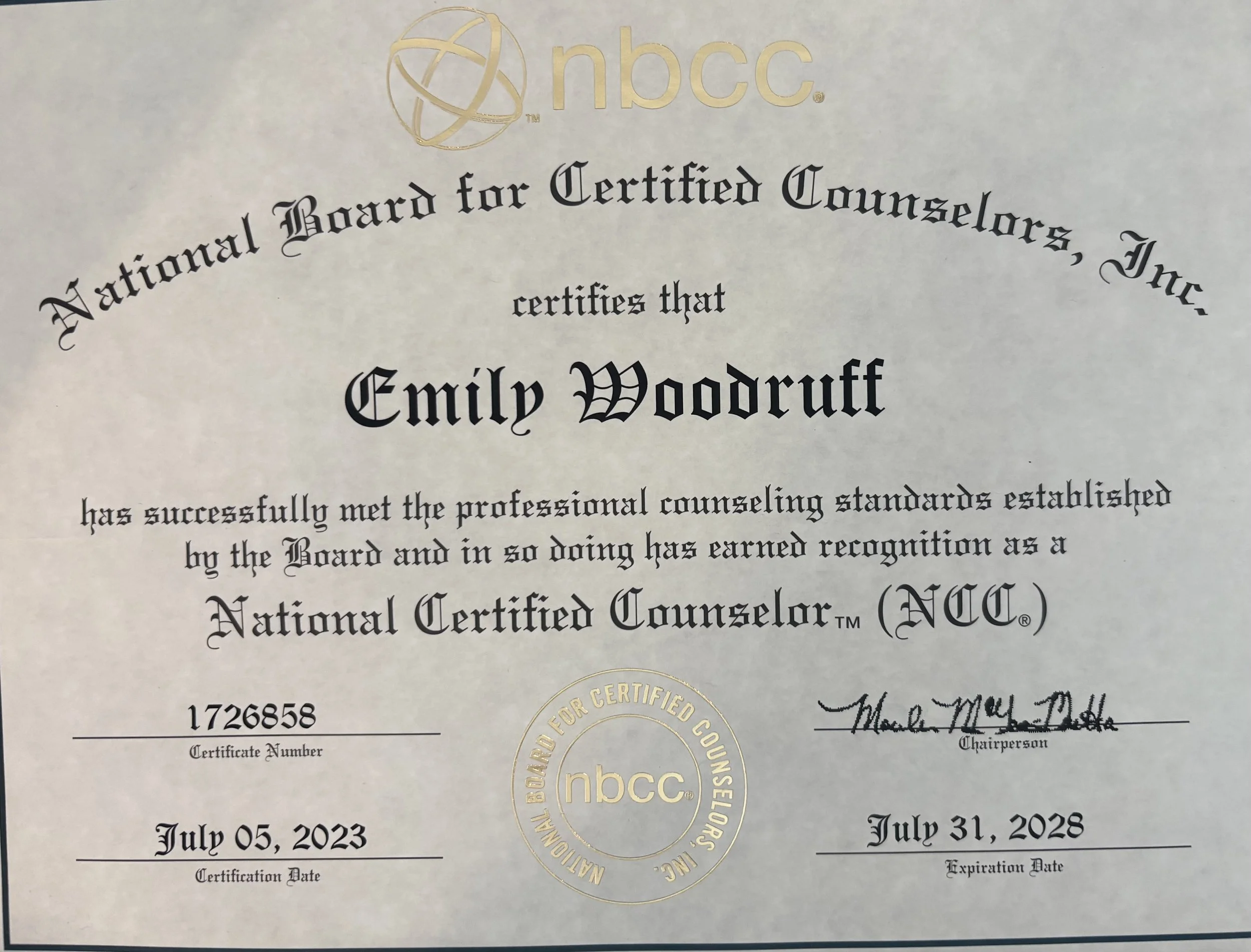
Credentials
Memberships
American Counseling Association
National Board for Certified Counselors
EMDR International Association
Start Here
More information:
Blossoming Wellness, LLC NPI number: 1972420248
Emily Woodruff, LPC NPI number: 1730873258
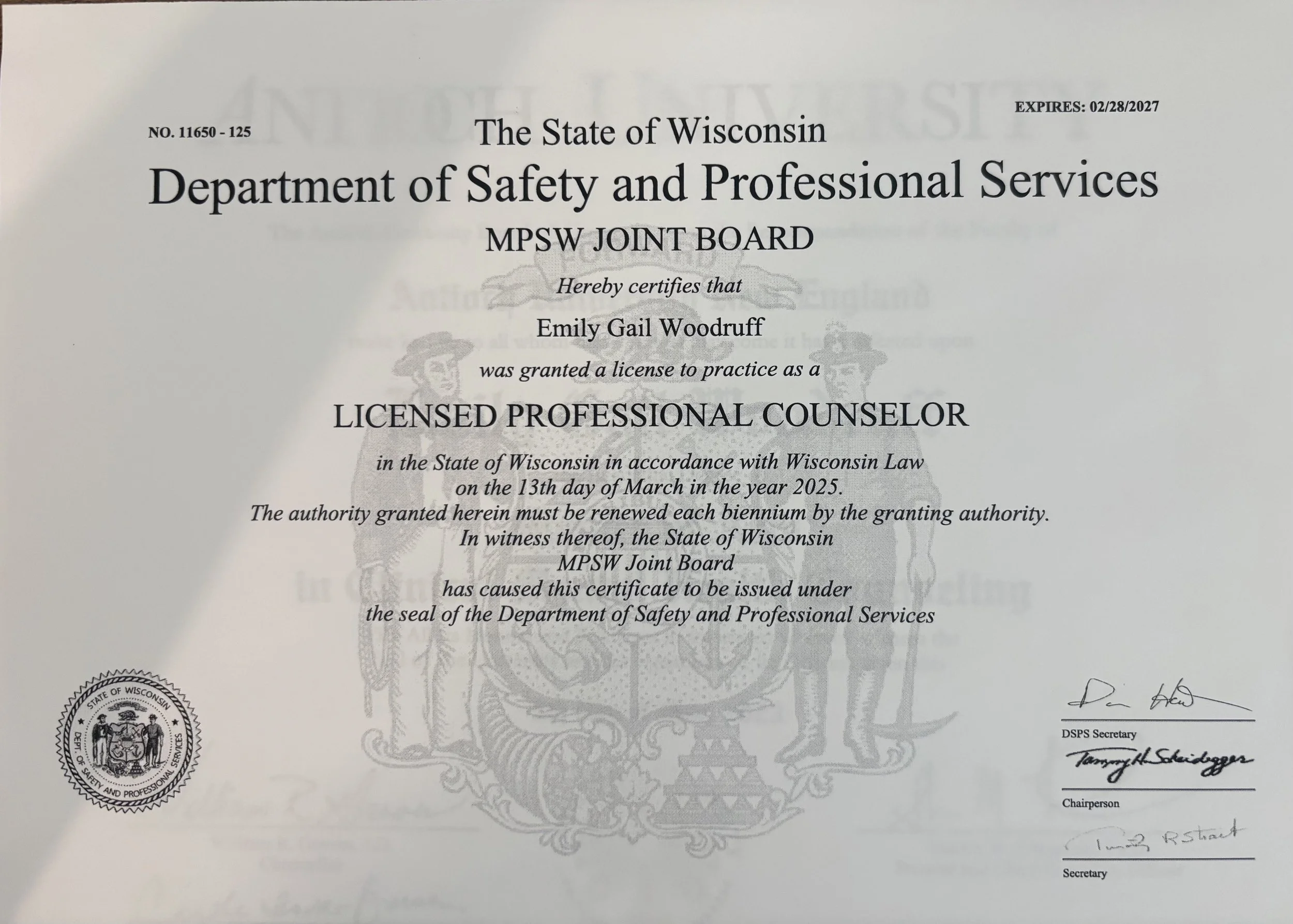
Emily Woodruff Licensed Professional Counselor number: 11650-125
License certified by the State of Wisconsin Department of Safety and Professional Services MPSW Joint Board
dsps@wisconsin.gov